
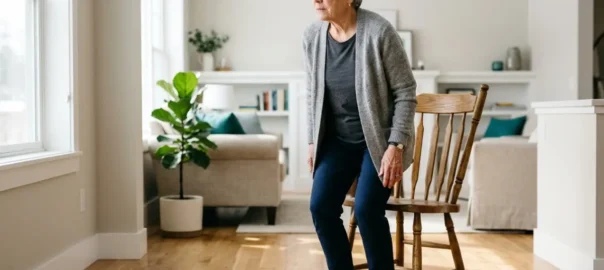
Staying active as we age is one of the most powerful choices we can make for our health and well-being. Regular movement helps older adults stay independent, lower their risk of chronic disease, and support brain health. Yet many people feel unsure about where to start or how to change their routines as their bodies change. The good news? It’s never too late to build healthy habits, and even 5 or 10 minutes of movement at a time adds up.
How Does Aging Change Your Body and Your Workouts?
As we age, our bodies slowly lose muscle and bone strength. That doesn’t mean we should stop exercising. It means training smarter, with regular strength work, balance practice, and a pace that fits your body today.
Muscle loss starts earlier than most people think. Harvard Health reports it can begin around age 35 and run 1 to 2 percent a year, then speed up after 60. Bone follows a similar path. Bone mass peaks in our 20s, and over time, weaker bones raise fracture risk.
Knowing this isn’t meant to discourage anyone from getting active. It helps us build smarter plans. When we know what’s happening in the body, we can work with it instead of against it.
Easy-to-Apply Tips: Know Your Starting Point
- Take a 10-minute walk and notice how you feel afterward. That’s your baseline.
- Try standing up from a chair without using your hands. Standing from a seated position counts as a balance activity. If it’s hard, tell your doctor.
- Pick one goal that matters to you, like carrying groceries or playing with your grandkids.
Why Is Strength Training So Important for Older Adults?
Strength training helps older adults keep muscle, protect their balance, and lower their risk of falls. Lifting light weights or using resistance bands two days a week is enough to start. Stronger muscles also help you stand, climb stairs, and carry groceries without help, which keeps you independent longer.
Strength training is one of the best tools against aging, yet many older adults skip it. Lifting weights or using bands helps us keep and even rebuild muscle. It also builds the back muscles that support good posture.
Here’s why that matters. Falls are the leading cause of injury for adults 65 and older. And stronger muscles help lower the chance of a serious injury when a fall does happen.
For a simple target, do 8 to 12 reps of each move, which counts as one set. Work all the major muscle groups at least two days a week. A trainer or physical therapist with experience in older adults can teach good form and help prevent injury.
Smart Moves for Starting Strength Training
- Start light. Use a light band or a small weight until each move feels smooth.
- Try three easy moves: wall push-ups, sit-to-stands from a chair, and band rows.
- Breathe out as you lift or push, and breathe in as you relax. Don’t hold your breath.
- Build up slowly. Add a little more resistance only when a move feels easy.
How Much Cardio Do Older Adults Need Each Week?
Most older adults need at least 150 minutes of moderate cardio each week. That’s about 30 minutes a day, five days a week. Brisk walking, swimming, and cycling all count. If you can’t hit that number yet, do what you can and build up slowly.
Cardio does more than keep the heart strong. It may help the brain, too. In the EXERT trial, nearly 300 inactive older adults with mild memory problems did either aerobic exercise or lighter stretching and balance work. Their thinking skills stayed steady over 12 months in both groups.
That’s why consistency beats intensity. For aging adults, the goal isn’t to push hard. It’s to keep showing up.
Water workouts are a great pick for sore joints. People can exercise longer in water without more joint or muscle pain, which helps those with arthritis. If you don’t have a pool, brisk walking, cycling, and dancing are joint-friendly too.
Simple Solutions to Reach 150 Minutes
- Break it up. Three 10-minute walks are easier to fit in than one 30-minute walk.
- Pick activities you enjoy. You’ll stick with the ones that feel fun.
- Walk with a friend or join a class so someone is counting on you.
- Mark each active day on a calendar and watch your streak grow.
Flexibility, Balance, and Fall Prevention: Staying Steady on Your Feet
Flexibility and balance work are often the first things cut from a fitness routine. Yet they matter most for older adults who want to hold onto their independence. The numbers show why. More than 1 in 4 older adults fall each year, and in 2023 the fall death rate for adults 65 and older was about 70 per 100,000.
Yoga, tai chi, and simple daily stretching help us move more freely. Stretching can make everyday tasks like tying your shoes easier. Tai chi stands out for balance. A review of 24 randomized trials found it lowered the risk of falling by about 24%.
Balance moves train the body to stay steady. Walking backward, standing on one leg, or using a wobble board are all good choices. And since strong back, belly, and leg muscles also improve balance, pairing these moves with strength work builds a solid base for lasting mobility. Even 10 to 15 minutes a day is a good place to start.
Wellness Hacks for Better Balance
- Stand on one leg while you brush your teeth. Keep one hand near the counter.
- Walk heel-to-toe along a hallway, like you’re on a tightrope.
- Keep a sturdy chair or a trusted person nearby whenever you try a new balance move.
- Try a beginner tai chi class at a local senior or community center.
A Simple Weekly Fitness Plan for Aging Adults: Step-by-Step Actions
Here’s one easy way to turn the guidelines into a real week. It follows the CDC’s advice to mix cardio, strength work on two or more days, and balance activities.
- Monday: 30 minutes of brisk walking, then 10 minutes of balance moves.
- Tuesday: Strength training. Do 8 to 12 reps of each move.
- Wednesday: 30 minutes of swimming, water aerobics, or easy cycling.
- Thursday: 30 minutes of brisk walking.
- Friday: Strength training, then 10 minutes of gentle stretching.
- Saturday: 30 minutes of something fun, like dancing or a walk with a friend.
- Sunday: 30 minutes of an easy walk or bike ride, then rest and recharge.
That adds up to 150 minutes of cardio, two strength days, and regular balance practice. Feeling worn out? Cut the plan in half and build back up. If a health condition keeps you from 150 minutes, the guidelines say to be as active as your abilities allow.
Should Older Adults Talk to a Doctor Before Starting a Fitness Routine?
Yes, it’s smart to check with a healthcare provider before you start or change a fitness routine. A doctor can review your health conditions and help you choose safe activities. Most older adults can exercise safely, and a quick talk helps you start with confidence.
Medical professionals can assess existing conditions, review medicines that might affect exercise, and suggest the right activity level. This matters most if you have a condition like osteoporosis. Bending forward at the waist and twisting can raise the risk of spine fractures, so some moves need to change.
In many cases, elder care programs benefit when administrators find a medical director for aging populations. This helps coordinate care between physicians, trainers, and therapists. A team approach also makes sure fitness plans match individual health needs, not a one-size-fits-all model. And professional oversight gives older adults and their families more peace of mind.
Helpful Strategies: Questions to Ask Your Doctor
- Are there any activities I should avoid with my health conditions?
- Could my medicines affect how I feel during exercise?
- How hard should I push, and how often should I work out?
- Should I see a physical therapist or trainer before I start?
Bottom Line: Start Where You Are and Keep Moving
Fitness in later life isn’t about getting youth back. It’s about protecting quality of life, function, and joy in everyday living. With the right mix of strength training, cardio, and balance work, older adults can keep a remarkable level of energy well into their later years.
The key is to start where you are, go at a pace that feels sustainable, and lean on qualified professionals along the way. Building a fitness routine later in life is one of the most meaningful investments a person can make in their own health and longevity.
About the Author:
Jassi, certified online fitness coach in India and founder of Indian Fitness CoachJassi is the founder of Indian Fitness Coach, where he helps people worldwide achieve fat loss, muscle building, and lifestyle transformation through sustainable methods. With certifications in Personal Training, Functional Strength Training, Rehab & Prehab Specialist, Women’s Health Fitness Coach, Diet & Nutrition Coach, and Obesity, Diabetes & Metabolic Training Specialist, Jassi combines expertise with a personalized coaching approach. Through tailored workout programs, custom nutrition plans, and consistent accountability, he ensures clients achieve results that last.