
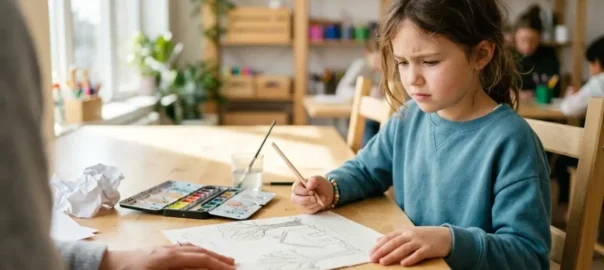
Creativity is an important part of childhood development. From drawing imaginative characters to painting colorful landscapes, children use artistic activities to explore ideas, communicate feelings, and understand the world around them. For families in Vaughan, children’s art classes can provide a structured yet enjoyable environment where young learners develop creative abilities and gain confidence through practice.
Art education is not only about learning to draw accurately or choosing attractive colors. It is also about encouraging curiosity, accepting mistakes, developing patience, and discovering personal interests. These experiences can help children become more comfortable expressing themselves in different situations.
How Children’s Art Classes in Vaughan Encourage Creativity
Children often have imaginative ideas but may need opportunities and guidance to turn them into finished projects. Art classes can introduce techniques that help them transform those ideas into drawings, paintings, and other creative work.
For instance, an instructor might introduce basic shapes before asking students to create an imaginary animal. Children can then decide which colors to use, what features to include, and how to present their creations. The same activity can produce many different results because each child brings a unique perspective.
Parents researching Children Art Classes Vaughan can explore the dedicated page on the Dream Art Studio website to learn more about the studio’s offerings. Families should confirm the current program details directly to understand which classes and techniques are available.
A creative learning environment should encourage children to experiment without expecting every project to look perfect. When students have permission to explore different ideas, they can develop original approaches to artistic challenges.
Building Confidence Through Artistic Achievement
Confidence develops when children have opportunities to try something new, overcome difficulties, and recognize their progress. Art projects provide a practical way to experience this process.
A child may initially find it difficult to draw a face, create a balanced composition, or mix colors. With instruction and repeated practice, the same task may gradually become easier. Completing a project can help the child recognize that effort and persistence lead to improvement.
This lesson is particularly valuable because children often encounter challenges in school and everyday life. Learning to approach an artistic problem patiently can encourage a positive attitude toward other learning experiences.
Teachers can support confidence by offering specific, constructive feedback. Comments about careful shading, interesting color choices, or improved attention to detail help children understand what they are doing well.
Developing Problem-Solving and Decision-Making Skills
Every art project involves decisions. Children must determine where to place objects, which materials to use, how to represent an idea, and what to do when something does not work as expected.
These decisions encourage flexible thinking. If a painting develops differently from the original plan, a child might add a new detail or adjust the composition. Rather than seeing every unexpected result as a failure, children can learn to treat it as an opportunity to try another approach.
Art activities can also improve observation. Drawing familiar objects encourages children to notice shapes, patterns, proportions, and small details they might otherwise overlook.
Although art lessons have their own educational goals, the thinking skills involved can complement learning in subjects such as mathematics, science, reading, and design.
Encouraging Emotional Expression
Children do not always find it easy to explain their emotions verbally. Drawing and painting can provide another way to communicate experiences, preferences, and imaginative stories.
A child might use bright colors to illustrate a joyful memory or create a picture about a favorite place. Talking about the finished work can help parents and teachers understand what interests the child and how the child interprets different experiences.
Art should not be treated as a test of emotional well-being, and one picture cannot reliably explain a child’s feelings. However, creative activities can offer a comfortable starting point for conversation.
An encouraging instructor respects each child’s individual choices and avoids forcing students to explain artwork when they are not comfortable doing so.
Social Skills and Collaborative Learning
Group art classes can create opportunities for children to interact with peers who share similar interests. Students may exchange ideas, observe different techniques, discuss their projects, and learn to respect different artistic approaches.
Working alongside other children can also teach patience and cooperation. Students may need to share supplies, take turns using materials, or listen while an instructor explains an activity.
These experiences can be especially helpful for children who enjoy learning in a group setting. At the same time, parents should consider whether their child prefers individual attention or feels comfortable participating in classroom activities.
Choosing an Appropriate Art Program
Parents should look for a program that matches the child’s age, experience, interests, and comfort level. Beginners may benefit from lessons that introduce basic techniques, while children with more experience may want opportunities to explore more challenging projects.
It is also useful to ask about instructor experience, class size, materials, lesson structure, and scheduling. Visiting Dream Art Studio is a practical way to begin researching the studio’s creative education options.
The goal is not to pressure children into becoming professional artists. Instead, the aim is to provide an enjoyable learning experience that encourages exploration and gradual skill development.
Helping Young Artists Grow
Children benefit when adults value their effort and curiosity rather than comparing their work with someone else’s. Parents can encourage artistic development by displaying favorite projects, providing creative materials at home, and asking children what they enjoyed learning.
For families in Vaughan, art classes can offer a positive way to combine creativity, skill development, and self-expression. With suitable instruction and encouragement, children can learn to approach challenges with greater patience, share their ideas more comfortably, and appreciate the unique perspective they bring to every project.
About The Author:
Beth Shamaiengar is a contributing editor at Health Journal. She holds a Bachelor’s degree in Journalism from the University of North Carolina at Chapel Hill and, before joining the Health Journal, became an award-winning writer and editor during 11 years with other publications. She also spent nearly a decade volunteering in PTA leadership roles in local schools, building her skills in marketing, event planning, project management, and communicating with a variety of audiences.